I just returned home from having traveled back home. Let that sink in for a second....and I'll explain:
While I might brand myself as a "Minnie" (-sotan or -apolitan...either works), I'm actually a Southern Missouri girl in my heart and soul...and DNA. My folks met at Tulsa University in Oklahoma and settled in my father's hometown of Joplin, MO after they got married. They bought a house, had a baby (my brother), bought a new house, and had another baby (me). We moved to Minnesota when I was not quite three years old and for a long time I didn't understand where I came from or who my relatives were. My parents' divorce complicated the relationships with my dad's side of the family; I don't remember seeing my nana more than one or two times before she was laid to rest in 1998. My dad had a sister, Elizabeth, who I also saw little of but, as my only aunt, I adored from afar. (My own daughter is named after my auntie.)
Growing up, I understood my aunt and her husband, my Uncle Ken, to be exotic, enchanting people for reasons I didn't quite grasp as a kid. In 1986, they moved to Riyadh, Saudi Arabia, to take teaching positions at an international school for Westerners living in that country. They were musicians: my aunt was an exceptional violinist and my uncle played any and all brass instruments. They traveled the globe, they drank wine, they loved good food, they were cultured and they had experienced more life than anyone I knew. They returned to the States in 1998 and settled back home in Joplin--proof that no matter how far you go, you can always come home.
I saw my aunt and uncle irregularly in the intervening decades, but each visit was a joy. I have often wondered how much stronger our relationship might have been if we were not separated by 500 miles and three states.
Fast forward....sadly, a week ago the news came that my aunt had passed away following a long illness. And so I, too, went back home.
My aunt's funeral was beautiful: she was surrounded by dozens and dozens of yellow roses and other arrangements. A fellow violinist played a haunting and provocative piece called, "The Lark Ascending" by Ralph Vaughn Williams. The music will stick with me forever because it captured the essence of life--measures of happiness met with measures of sadness, punctuated with dissonant notes. But what really struck me most of all was my uncle seated in the row in front of me, his thin shoulders shaking as he quietly cried for his wife.
How does a love like this evolve? How can there be such mutual devotion, commitment, and adoration? My uncle did not leave my aunt's side the entire time her health was declining. When she became too ill to leave their bedroom, he brought everything to her. When the time came for hospice, he made arrangements. And when she passed from this earth, it was under the umbrella of his love and care.
He shared a story today that makes me cry as I type it here: not long ago, Elizabeth awoke from a nap where she dreamt that her parents were waiting for her in heaven. But she wept as she relayed to him that she suddenly understood how her death would mean that they would have to be apart. I have no doubt that he likely cried as well, and I can perfectly picture him holding her small hand, smoothing her soft gray curls, and reassuring her that they will find each other once again when the time comes.
To have loved someone as wholly as he loved Elizabeth is not a common thing, and us Palmers should know: all of us have been divorced, including Elizabeth--Uncle Ken was actually her second husband. But seemingly against all odds, this marriage not only survived, it thrived for 45 years. What was the secret?? In part, at least, I've come to understand this: they fully understood each other because they shared the same passion. Music was their lifeblood: creating it, teaching it, sharing it. They could build a life together because they both wanted the same thing. It's not enough just to have some stuff in common--as in, "well, we both like the Olive Garden." Sure, yes, that's nice...but greatness is not built on a sandy foundation. The commonalities have to be bigger, they have to be more central to your identity. You have to feel the things your partner feels because you've always felt them, just as he has always felt them. Your dreams are his dreams because you each had the same dream before you even met.
Elizabeth and Ken were able to build this relationship because the concrete foundation was made out of a shared passion. They each had a dream to share music with the world; doing so together made sense and was only natural. This was their secret, I think. I don't know if I'll ever be so blessed as to find a love like this...but it sure as hell is worth looking for.
Showing posts with label commitment. Show all posts
Showing posts with label commitment. Show all posts
Saturday, March 26, 2016

Monday, May 27, 2013
Gay marriage is gay marriage
In the not so distant past, say 60 years ago, the phrase "gay marriage" would have invoked a mental image of a happy (gay), young white heterosexual couple. Homosexuals, as a group, didn't really exist in the collective mainstream American mind until the Stonewall riot in 1969.
On June 28, 1969, New York City police raided a popular gay bar, Stonewall Inn in Greenwich Village. At the time, cops were targeting gay bars as a means of "cleaning up" the city. Fueled in part by the raging fire of social justice movements in the 60's and also by the sheer exhaustion that accompanies unequal treatment, patrons of Stonewall Inn refused to be loaded into paddy wagons. This refusal lit a spark in the predominantly gay neighborhood, and resulted in riots that lasted six days--and brought the topic of gay rights into the forefront of American awareness.
Forty-four years later, my home state of Minnesota has finalized crossed what may be the final frontier in marriage equality when the legislature approved legislation to provide for the recognition of gay marriage. In becoming just the twelfth state to do so, Minnesota has reasserted its place in the nation as a progressive, forward-leaning place.
Just as many in my generation can't imagine why gay marriage is such an issue, many in my parents' generation couldn't conceptualize any problem with interracial marriage. But much like the current marriage equality movement for same-sex couples, interracial marriage faced the same road blocks known to gays today, including attempts to amend the nation's Constitution to exclude interracial marriage.
Instead, the US Supreme Court used the Constitution to provide for the legal basis for marriage expansion. In a 1964 decision on McLaughlin v Florida, the Supremes recognized that the 14th Amendment's guarantee of equal protection under the law applied to the state's laws governing cohabitation--thus overturning Florida's exclusionary statute and setting the stage for the 1967 decision in Loving v Virginia, which fully legalized interracial marriage.
My hope is that the current Court is as equitable as the Warren court was. As the nation awaits a decision on California's exclusionary Proposition 8 and on a separate case regarding the federal Defense of Marriage Act (DOMA), many of our fellow American's well-being remains on the line. Marriage isn't just about the fulfillment of love; it is imbued with legal rights that most of us take for granted--rights such as the estate tax shelter, transfer of retirement benefits of a deceased partner, and family medical leave time from work to care for a spouse. Imagine if your loving partner was seriously ill, and your employer was well within his federally protected right to deny you the time away from work to provide care?
Our gay brothers and sisters deserve the chance to fulfill their lives in the same ways as the rest of us. This isn't about protecting the "sanctity of marriage" because the law doesn't recognize holiness under our belief of the separation of church and state. Nor does "sanctity" apply under its secondary meaning of inviolability--laws in every state provide for divorce. I can think of no reasonable or logical argument to exclude two loving, consensual people from the issuance of a governmentally-recognized marriage license that affords the opportunity to the legal protections provided by state and federal government.
Our Constitution and its attendant Bill of Rights are precious and central to our belief system as Americans. They make this country great. In the moral turmoil that followed the Civil War, our forefathers sought to clarify and improve the intentions of the founders by adding the 14th Amendment:
This is strong, clear language that invites us toward inclusiveness, rather than division. It was true then regarding the abolishment of slavery; true for the women's suffrage movement at the turn of the 20th century; true for integrating public education in 1954; and it remains true today for same-sex couples.
On June 28, 1969, New York City police raided a popular gay bar, Stonewall Inn in Greenwich Village. At the time, cops were targeting gay bars as a means of "cleaning up" the city. Fueled in part by the raging fire of social justice movements in the 60's and also by the sheer exhaustion that accompanies unequal treatment, patrons of Stonewall Inn refused to be loaded into paddy wagons. This refusal lit a spark in the predominantly gay neighborhood, and resulted in riots that lasted six days--and brought the topic of gay rights into the forefront of American awareness.
Forty-four years later, my home state of Minnesota has finalized crossed what may be the final frontier in marriage equality when the legislature approved legislation to provide for the recognition of gay marriage. In becoming just the twelfth state to do so, Minnesota has reasserted its place in the nation as a progressive, forward-leaning place.
Just as many in my generation can't imagine why gay marriage is such an issue, many in my parents' generation couldn't conceptualize any problem with interracial marriage. But much like the current marriage equality movement for same-sex couples, interracial marriage faced the same road blocks known to gays today, including attempts to amend the nation's Constitution to exclude interracial marriage.
Instead, the US Supreme Court used the Constitution to provide for the legal basis for marriage expansion. In a 1964 decision on McLaughlin v Florida, the Supremes recognized that the 14th Amendment's guarantee of equal protection under the law applied to the state's laws governing cohabitation--thus overturning Florida's exclusionary statute and setting the stage for the 1967 decision in Loving v Virginia, which fully legalized interracial marriage.
My hope is that the current Court is as equitable as the Warren court was. As the nation awaits a decision on California's exclusionary Proposition 8 and on a separate case regarding the federal Defense of Marriage Act (DOMA), many of our fellow American's well-being remains on the line. Marriage isn't just about the fulfillment of love; it is imbued with legal rights that most of us take for granted--rights such as the estate tax shelter, transfer of retirement benefits of a deceased partner, and family medical leave time from work to care for a spouse. Imagine if your loving partner was seriously ill, and your employer was well within his federally protected right to deny you the time away from work to provide care?
Our gay brothers and sisters deserve the chance to fulfill their lives in the same ways as the rest of us. This isn't about protecting the "sanctity of marriage" because the law doesn't recognize holiness under our belief of the separation of church and state. Nor does "sanctity" apply under its secondary meaning of inviolability--laws in every state provide for divorce. I can think of no reasonable or logical argument to exclude two loving, consensual people from the issuance of a governmentally-recognized marriage license that affords the opportunity to the legal protections provided by state and federal government.
Our Constitution and its attendant Bill of Rights are precious and central to our belief system as Americans. They make this country great. In the moral turmoil that followed the Civil War, our forefathers sought to clarify and improve the intentions of the founders by adding the 14th Amendment:
No state shall make or enforce any law which shall abridge the privileges or immunities of citizens of the United States...nor deny to any person within its jurisdiction the equal protection of the laws.
This is strong, clear language that invites us toward inclusiveness, rather than division. It was true then regarding the abolishment of slavery; true for the women's suffrage movement at the turn of the 20th century; true for integrating public education in 1954; and it remains true today for same-sex couples.
Sunday, April 14, 2013
Invasive Species
Last night was ladies' night out. You know the kind: we get all dolled up in too much makeup and too high of heels to head out on the town to taunt men, with the rule being that we all leave the bar together. Always a good time...unless you're a guy trying to break into that circle....sorry, guys...
Around midnight, we descended on a St. Paul hot spot called Wild Onion. As the girls headed out to the dance floor, I hung back to survey the crowd. Within two minutes, the Creepazoid was at my side.
"Hi! I'm Eric." (Or is it Erik? Or Erick? Erich? I didn't ask.)
I stared blankly at him. Who was this creature? Was I in a 1996 time-warp? He wore a plain blue v-neck t-shirt that was two sizes too small, a heavy silver chain necklace, and gel-spiked hair.
"I love Spice Girls! Let's go dance!" he yelled in my ear. What guy says that?! For that matter, what girl in a post-Y2K world would say that?! It should also be noted that he was quick to tell me that he was sober--doesn't drink--and that he was there alone. Red flag! Red flag!
 Before I knew it, I was on the dance floor, trying mightily to keep a healthy distance between me and the Creepazoid. I quickly located my gal pals and gave them the pleading "help-me-out-here" eyes. They laughed at my misfortune and we tried to make our escape from the him.
Unfortunately, it wasn't that easy. When we found a table to sit at, he squeezed right in next to me in the booth. He was not to be deterred by our girl talk or blatant texting to each other about his obnoxious behavior. To quote Vince Vaughn's character in "Wedding Crashers"...we had a Stage Five Clinger. As other guys came up to try to talk to us, he brushed them off and whispered to me that they were "number two" to him. To say I was horrified is to put it mildly.
Anyone who knows me at all knows that I HATE being a possession. Being owned. Being caged. It makes my innards queasy. And it made me think: what is the right amount of "possession" in a relationship? Where do we draw the line between "we" and "I"?
Earlier in the day yesterday, I had coffee with a dear friend who is in the beginning stages of divorce. As we talked about our failed marriages, we found that we had both struggled with how much of ourselves to turn over to our partners. At the beginning my marriage, I neglected my friends and my personal needs in order to be with him, (wrongly) thinking that doing so would make our relationship stronger. But instead, I lost sight of who I was and what I needed, which was a contributing factor to the failure of the marriage.
An article in Psychology Today discusses this very issue, and urges partners to find ways to communicate regarding personal space needs. Failure to communicate the needs can foster a breeding ground for "negative feelings: rejection, insecurity, jealousy, mistrust, and resentment." When one partner moves away without telling the other what (s)he's up to, even when the motives are pure, it can cause a rift in the relationship. Talking about space needs before it becomes an issue can head off a potential storm.
"Space" is a multi-faceted thing--it comes in many forms. There's emotional space, physical space, and even spiritual space. A failure to provide enough room in one of these areas will likely result in the partner taking space in another form. Dr Vondie Lozano, a California marriage and family therapist, stated in a Wall Street Journal piece on relationships that "if you don't give them their physical space, they will take emotional space."
But when we do give our partners what they need, our relationship is much more likely to thrive. In romantic relationships, we seek to give comfort and increase happiness for the person that we're with. That may come in the form of a good meal, a sweet note, or a thoughtful gift. What if the best gift you can give your partner is the gift of personal space?
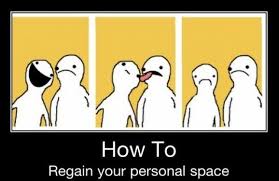
Around midnight, we descended on a St. Paul hot spot called Wild Onion. As the girls headed out to the dance floor, I hung back to survey the crowd. Within two minutes, the Creepazoid was at my side.
"Hi! I'm Eric." (Or is it Erik? Or Erick? Erich? I didn't ask.)
I stared blankly at him. Who was this creature? Was I in a 1996 time-warp? He wore a plain blue v-neck t-shirt that was two sizes too small, a heavy silver chain necklace, and gel-spiked hair.
"I love Spice Girls! Let's go dance!" he yelled in my ear. What guy says that?! For that matter, what girl in a post-Y2K world would say that?! It should also be noted that he was quick to tell me that he was sober--doesn't drink--and that he was there alone. Red flag! Red flag!
Before I knew it, I was on the dance floor, trying mightily to keep a healthy distance between me and the Creepazoid. I quickly located my gal pals and gave them the pleading "help-me-out-here" eyes. They laughed at my misfortune and we tried to make our escape from the him.Unfortunately, it wasn't that easy. When we found a table to sit at, he squeezed right in next to me in the booth. He was not to be deterred by our girl talk or blatant texting to each other about his obnoxious behavior. To quote Vince Vaughn's character in "Wedding Crashers"...we had a Stage Five Clinger. As other guys came up to try to talk to us, he brushed them off and whispered to me that they were "number two" to him. To say I was horrified is to put it mildly.
Anyone who knows me at all knows that I HATE being a possession. Being owned. Being caged. It makes my innards queasy. And it made me think: what is the right amount of "possession" in a relationship? Where do we draw the line between "we" and "I"?
Earlier in the day yesterday, I had coffee with a dear friend who is in the beginning stages of divorce. As we talked about our failed marriages, we found that we had both struggled with how much of ourselves to turn over to our partners. At the beginning my marriage, I neglected my friends and my personal needs in order to be with him, (wrongly) thinking that doing so would make our relationship stronger. But instead, I lost sight of who I was and what I needed, which was a contributing factor to the failure of the marriage.
An article in Psychology Today discusses this very issue, and urges partners to find ways to communicate regarding personal space needs. Failure to communicate the needs can foster a breeding ground for "negative feelings: rejection, insecurity, jealousy, mistrust, and resentment." When one partner moves away without telling the other what (s)he's up to, even when the motives are pure, it can cause a rift in the relationship. Talking about space needs before it becomes an issue can head off a potential storm.
"Space" is a multi-faceted thing--it comes in many forms. There's emotional space, physical space, and even spiritual space. A failure to provide enough room in one of these areas will likely result in the partner taking space in another form. Dr Vondie Lozano, a California marriage and family therapist, stated in a Wall Street Journal piece on relationships that "if you don't give them their physical space, they will take emotional space."
But when we do give our partners what they need, our relationship is much more likely to thrive. In romantic relationships, we seek to give comfort and increase happiness for the person that we're with. That may come in the form of a good meal, a sweet note, or a thoughtful gift. What if the best gift you can give your partner is the gift of personal space?
Don't make your partner resort to this:
As always...feedback welcome!
leahc168@gmail.com
Tuesday, April 9, 2013
The State of our Family State
American marriages are in crisis. And no, I don't mean because of gays. Hell, if gays want in on this broken institution, they should be more than welcome to it. If "Queer Eye for the Straight Guy" is any indicator, maybe gay marriage could even improve things!
But I digress. Back to boring old heterosexual marriage. The "traditional" kind--a dad, mom, two kids, a dog, an SUV, and a sprawling suburban home.
Once upon a time, I had all that. We were living the American dream...but it was a nightmare. He worked a lot to make sure we could afford it all and I was over-stressed between upstarting a career and primary responsibility for the kids, who were both under age 5. Daycare expenses were eating us alive (as they are for a majority of Americans, especially in our area), home ownership was a chore, and our jobs had us working opposite shifts. We spent very little time together as a couple.
Not surprisingly, the bubble burst and we divorced before our tenth wedding anniversary. While the reasons for our divorce are far more complex than I will outline here, suffice to say that the circumstances outlined above were all contributing factors to our failure.
 And we're not alone. In fact, a plurality of marriages in the United States these days are like ours was: stressed over money, work, and children. Despite societal and technological advances that allow us to work from home, wash clothes in half the time that our grandparents did, and prepare pre-cooked food in microwaves, Americans still report being unhappy. Why?
A major reason can be found in the way we spend our time. A longitudinal study over four decades by three sociologists from University of Maryland (College Park) found that my generation's mothers report spending more time providing structured parenting than our moms did--this, in spite of increased hours spent outside the home working. The trade-off? Leisure time and interpersonal relationships such as spouses and friends. In order to achieve that "perfect" work-life balance, in other words, women are foregoing their own needs (and the needs of extended family, friends, and husbands) in favor of work and child-rearing.
Why does it take so much more time to be a parent in the 21st century? One reason lies in the rise of "helicopter parenting" so called for its comparison to hovering, in this case over children. It requires a great deal of time and energy to hover over a child's homework, TV selections, internet time, sports, and personal lives. Bear in mind that helicopter parenting goes beyond normal levels of childcare: in its extreme, it's found in parents who do their children's homework, call their college students to remind them to get up for class each day, or berate a coach for not selecting their child for the varsity team. As sociology professor Margaret K. Nelson of Middlebury College writes in a Washington Post opinion piece, this style of parenting is "is not just exhaustive; it sounds exhausting." She continues: "Working a demanding job while paying painstaking attention to one's children leaves little time for maintaining a marriage."
 But this rise in Intense Parenting also gives a socially-acceptable excuse to couples who may want to get divorced but remain married, for any number of real reasons. "We're staying together for the kids," I hear over and over again. After all, who could argue with a parent who chooses their children's well-being over their own happiness? As if I could say to them, "Awww...to heck with the kids! What about YOU?" I'm pretty sure that response would be unappreciated.
Unfortunately for those unhappy couples that employ this reasoning, social science research has posted results to the contrary: unhappy parents do not raise happy children. In fact, one study of 1400 families found that over 75% of the children of divorced parents were just as well-adjusted as their counterparts from non-divorced parents. The author of this study, E. Mavis Hetherington, a developmental psychologist, notes that it is "very bad" for children "if [they] are in marriages with parents who are contemptuous of each other, not even with overt conflict, but just sneering and subtle putdowns that erode the partner's self-esteem."
So while divorce should be the last resort for a couple, those of us that have experienced it and worry about our children's well-being can perhaps find a bit of peace of mind in Dr. Hetherington's research. The "staying for the kids"-mentality can actually have a less positive outcome than we once believed. It's important to note, however, that well-adjusted post-divorce children don't just happen. When we divorce, we owe it to our kids to ensure that they have the emotional and psychological tools to handle this major life disruption. But the act of the divorce alone does not have an innate ability to ruin the lives of children.
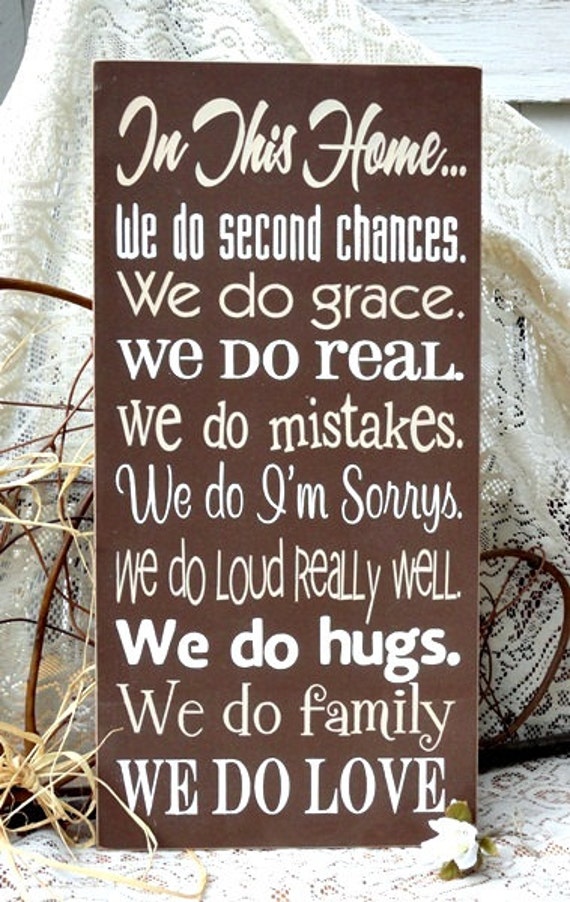 Families are complex creations, but that is what makes them beautiful. Love exists in all familial forms: single parents, married parents, gay parents, childless couples. Far be it from any one of us to judge another's choices or lifestyle; rather, we can only do our best to extend a helping hand when one is needed.
 A family isn't the presence or absence of a partner, children, a pet, a car, or any tangible item. A family is defined by love.
As always:
Thoughts/comments/ideas/rebuttal welcome: leahc168@gmail.com
Wednesday, March 13, 2013
Friends With Benefits (?)(!)(.)
Author's note: My friend, "Jim," asked me to write about this topic. No, we're NOT friends with benefits. Just friends. No benefits. I promise.
Friends with benefits. No strings attached. Pillow pals. Lots of names for what is essentially the same thing: repeated sexual encounters with the same person, without a romantic relationship or commitment.
Urban Dictionary's definition:
The trouble with all of it is that one person (usually the female in heterosexual relationships) ends up falling for the other. Even with the best intentions, with the expectations clear and managed, we girls end up falling for the guy and making a mess of the whole thing. I wondered why this was...so, naturally, I turned to the Internet for answers.
As it turns out, there's a scientific answer. Scientific studies have shown that humans experience a hormone release following orgasm. In women, the hormone is oxytocin--the so-called "cuddling hormone" because it lowers our capacity for fear and increases our sense of bonding. Men, on the other hand, release dopamine--the pleasure hormone. So while men are laying in bed, feeling happy and sleepy, women's hormones are busy convincing us that we are bonded, in love, and ready to commit to this guy.
Mother Nature is a real *%$^, isn't she?! That's not even fair!
This, dear readers, is why I do not believe in the concept of "friends with benefits" (FWB). It's scientifically impossible for women to handle. Unless.....
1. The sex is bad. It's basic: if women don't reach orgasm, then the oxytocin release won't happen and the whole let's-fall-in-love-and-get-married-and-have-a-zillion-babies reaction is stopped cold. HA! Take that, evolution!! Of course, the downfall is that bad sex is no fun and negates the entire reason for the experience. Hmm...maybe this isn't a plausible answer...
2. You avoid cuddling afterwards. Shaking off the whole experience before the hormones can really kick in seems like it would help. Get out of bed, take a cold shower, and WAKE THE HELL UP. This isn't love; it's sex.
The concept gets even more convoluted when you have a real friendship with the other person. As I was talking this over with a gal pal, it occurred to us that there's a difference between friends with benefits and acquaintances with benefits. A friend--someone you're connected to, that you share a bond with--complicates the FWB sexual relationship even more. If you are invested in his/her well-being by virtue of the friendship, AND you're sleeping with him/her...how is this not dating? How is this not a romantic relationship? At least in the acquaintance scenario, you are not bonded by anything other than a mutual appreciation for a satisfying sexual relationship. It seems it would be a lot more emotionally safe to keep the friendship out of it.
There. You've been warned.

Friends with benefits. No strings attached. Pillow pals. Lots of names for what is essentially the same thing: repeated sexual encounters with the same person, without a romantic relationship or commitment.
Urban Dictionary's definition:
Friends with Benefits (verb): A healthy, fun sexual relationship between two people......Until one falls for the other, the friendship blows to pieces, and those two people find themselves worse off than they were before.That sounds pretty accurate, given my training (none) and experience (limited). Still, I have friends (mostly men) that swear by this act--they believe that not getting involved emotionally is better than the risks and pitfalls of a committed relationship.
The trouble with all of it is that one person (usually the female in heterosexual relationships) ends up falling for the other. Even with the best intentions, with the expectations clear and managed, we girls end up falling for the guy and making a mess of the whole thing. I wondered why this was...so, naturally, I turned to the Internet for answers.
As it turns out, there's a scientific answer. Scientific studies have shown that humans experience a hormone release following orgasm. In women, the hormone is oxytocin--the so-called "cuddling hormone" because it lowers our capacity for fear and increases our sense of bonding. Men, on the other hand, release dopamine--the pleasure hormone. So while men are laying in bed, feeling happy and sleepy, women's hormones are busy convincing us that we are bonded, in love, and ready to commit to this guy.
Mother Nature is a real *%$^, isn't she?! That's not even fair!
This, dear readers, is why I do not believe in the concept of "friends with benefits" (FWB). It's scientifically impossible for women to handle. Unless.....
1. The sex is bad. It's basic: if women don't reach orgasm, then the oxytocin release won't happen and the whole let's-fall-in-love-and-get-married-and-have-a-zillion-babies reaction is stopped cold. HA! Take that, evolution!! Of course, the downfall is that bad sex is no fun and negates the entire reason for the experience. Hmm...maybe this isn't a plausible answer...
2. You avoid cuddling afterwards. Shaking off the whole experience before the hormones can really kick in seems like it would help. Get out of bed, take a cold shower, and WAKE THE HELL UP. This isn't love; it's sex.
The concept gets even more convoluted when you have a real friendship with the other person. As I was talking this over with a gal pal, it occurred to us that there's a difference between friends with benefits and acquaintances with benefits. A friend--someone you're connected to, that you share a bond with--complicates the FWB sexual relationship even more. If you are invested in his/her well-being by virtue of the friendship, AND you're sleeping with him/her...how is this not dating? How is this not a romantic relationship? At least in the acquaintance scenario, you are not bonded by anything other than a mutual appreciation for a satisfying sexual relationship. It seems it would be a lot more emotionally safe to keep the friendship out of it.
There. You've been warned.
Friday, March 8, 2013
Fear & Loving in Minneapolis
Someone once accused me, not too long ago, of being afraid of commitment. At the time, my immediate reaction was to laugh. How ridiculous! I thought. I'm the person who sits and analyzes relationships, writes about it, thinks about it.
But the statement stuck with me and I found myself really considering the idea. Am I afraid of commitment? If so, why? Even now, writing this post, I'm struggling with what I've already thought through on the topic.
The easy answer is that, as a divorced woman, I think that love and relationships are perhaps too difficult. But I reject that answer nearly as quickly as I present it, because a difficult thing has never been something I've shied away from. And of course love and relationships are difficult! It's not easy to find the person with whom you would share everything, compromise some things, give up others. That person who makes your heart flutter, even years after the first kiss. The man whose face you never tire of looking at, whose flaws are known and still loved, whose scars make him even more incredible. You know--that Mr. Right.
So I tried to examine what other reasons I had that would be stopping me from getting into a relationship. It's certainly not the men. My goodness, there are some great guys out there. Beautiful, strong men--and I'm not talking physically. I mean that these men have put their hearts and emotions out there, risked looking foolish, in order to make their intentions known to me. And one by one, I've found a reason to duck away.
Instead, almost without fail, I seek out the guy who is clearly not right: the player, the faker, the tough guy, the empty one, the unavailable. And when it all goes upside down inside of a week or two, I might shed a tear or two but ultimately, there's a small part of me that's almost relieved.
It's like eating a steady diet of empty calories and wondering why you're never satisfied.
Is it just that I'm not ready to be in a relationship, or is it that I'm truly afraid? If I'm afraid, what exactly causes the fear? Can the fear be conquered or is it a fatal flaw? Am I just too picky, expecting too much?
After all, two is better than one. I'm not such a fool that I can't see that.
But the statement stuck with me and I found myself really considering the idea. Am I afraid of commitment? If so, why? Even now, writing this post, I'm struggling with what I've already thought through on the topic.
The easy answer is that, as a divorced woman, I think that love and relationships are perhaps too difficult. But I reject that answer nearly as quickly as I present it, because a difficult thing has never been something I've shied away from. And of course love and relationships are difficult! It's not easy to find the person with whom you would share everything, compromise some things, give up others. That person who makes your heart flutter, even years after the first kiss. The man whose face you never tire of looking at, whose flaws are known and still loved, whose scars make him even more incredible. You know--that Mr. Right.
So I tried to examine what other reasons I had that would be stopping me from getting into a relationship. It's certainly not the men. My goodness, there are some great guys out there. Beautiful, strong men--and I'm not talking physically. I mean that these men have put their hearts and emotions out there, risked looking foolish, in order to make their intentions known to me. And one by one, I've found a reason to duck away.
Instead, almost without fail, I seek out the guy who is clearly not right: the player, the faker, the tough guy, the empty one, the unavailable. And when it all goes upside down inside of a week or two, I might shed a tear or two but ultimately, there's a small part of me that's almost relieved.
It's like eating a steady diet of empty calories and wondering why you're never satisfied.
Is it just that I'm not ready to be in a relationship, or is it that I'm truly afraid? If I'm afraid, what exactly causes the fear? Can the fear be conquered or is it a fatal flaw? Am I just too picky, expecting too much?
After all, two is better than one. I'm not such a fool that I can't see that.
Subscribe to:
Posts (Atom)