I was out for a walk tonight on this glorious late summer evening: the early sunset light on the leafy green trees reminded me that fall is sneaking in quickly and it won't be long until winter is upon us. In Minnesota, the cold can set in as early as Halloween, and nearly always does by Thanksgiving. It hit me that we have a maximum of eight more weeks of good weather before it's parkas and boots.
Eight weeks. But winter seems to far away - the leaves haven't even begun to change.
Eight weeks. But just eight weeks ago, summer was in full bloom.
Eight weeks ago, my former fiance was still alive. I took his presence on this earth for granted because only now I know the emptiness of a world without Scott. The grief, the guilt, the sorrow that I've felt every.single.day since he died is unrelenting. Some days, I rejoice in our memories. Other days, I cry.
Six weeks ago, my brother was living life like he always does: working, playing guitar, spending time with his partner. And then all of a sudden he wasn't: an infection entered his heart, devoured his pulmonary valve, and filled his lungs.
Three weeks ago, emergency open heart surgery saved his life.
Two weeks ago, I was in San Francisco with my family while my brother was recovering in the hospital. Hours turned into days of holding his hand as he lied in the intensive care unit largely unconscious. I was in a staring contest with the machines and monitors, willing them to blink with good news. After eight full days, they finally did. My brother is a hell of a fighter.
Just eight weeks.
These are terrible things to have to go through - the images in my mind of Scott's death, his memorial service, his children's grief are seared in my memory. The sound of the ventilator keeping my brother's breath going echos in my eardrums. The scent of the magnolias, honeysuckle, and jasmine flowers that line the sidewalks of San Francisco will forever trigger me to remember the miles I walked to and from the hospital.
But I will also be reminded of the extraordinary amount of love I witnessed and felt. The outpouring of kind messages from people I had never met but who found me via social media after Scott died was deeply touching. The grace of my coworkers who gathered to support me through the last eight weeks is a kindness that I will never be able to repay. My gratitude for my boss and my team is larger than words can possibly encompass. My whole family was out in San Francisco with my brother for six days, and I've never felt closer to them in all of my 37 years; this terrible illness tried to take us down, but instead it brought us together.
Most of all, though, I saw the love between my brother and his partner. They've shared twelve years together but because they live in California, I didn't know much about their relationship. For the entire eight days after surgery when he was heavily sedated and medicated, she was there. I mean, our whole family was *there* - but she was there in a way that only a partner can be. When she would take his hand, kiss his forehead, murmur in his ear, I could actually see his heart rate slow down on the monitor--often it would drop below 100, which was a big deal for someone as sick as he was. He knew she was there, he could feel her, and it gave him great comfort while his body was in so much pain. That is the power of love.
When I got home from California, I was exhausted - and yet life had to keep going. I had my kids, they had sports, and I had to get back to work. There was nothing in my fridge to eat since I'd been gone for two weeks. There was even less in my emotional tank to keep me going, especially since my boyfriend and I had just broken up as well.
I was dragging ass, deflated and tired as I trudged up the stairs to my apartment two days after I'd been back in Minnie. I opened my door and was completely surprised to find my two closest girlfriends had let themselves in, brought me flowers, and were making me dinner! If I had had any tears left to cry, I surely would've spilled them all over T's gnocchi dish. Champagne, homemade ice cream, and leftovers all filled my fridge...and their love and support filled my heart. That is the power of friendship.
Eight weeks. Of loss. Of sorrow. Of sadness. Of family. Of friendship. Of love.
Showing posts with label family. Show all posts
Showing posts with label family. Show all posts
Thursday, September 8, 2016

Tuesday, April 9, 2013
The State of our Family State
American marriages are in crisis. And no, I don't mean because of gays. Hell, if gays want in on this broken institution, they should be more than welcome to it. If "Queer Eye for the Straight Guy" is any indicator, maybe gay marriage could even improve things!
But I digress. Back to boring old heterosexual marriage. The "traditional" kind--a dad, mom, two kids, a dog, an SUV, and a sprawling suburban home.
Once upon a time, I had all that. We were living the American dream...but it was a nightmare. He worked a lot to make sure we could afford it all and I was over-stressed between upstarting a career and primary responsibility for the kids, who were both under age 5. Daycare expenses were eating us alive (as they are for a majority of Americans, especially in our area), home ownership was a chore, and our jobs had us working opposite shifts. We spent very little time together as a couple.
Not surprisingly, the bubble burst and we divorced before our tenth wedding anniversary. While the reasons for our divorce are far more complex than I will outline here, suffice to say that the circumstances outlined above were all contributing factors to our failure.
 And we're not alone. In fact, a plurality of marriages in the United States these days are like ours was: stressed over money, work, and children. Despite societal and technological advances that allow us to work from home, wash clothes in half the time that our grandparents did, and prepare pre-cooked food in microwaves, Americans still report being unhappy. Why?
A major reason can be found in the way we spend our time. A longitudinal study over four decades by three sociologists from University of Maryland (College Park) found that my generation's mothers report spending more time providing structured parenting than our moms did--this, in spite of increased hours spent outside the home working. The trade-off? Leisure time and interpersonal relationships such as spouses and friends. In order to achieve that "perfect" work-life balance, in other words, women are foregoing their own needs (and the needs of extended family, friends, and husbands) in favor of work and child-rearing.
Why does it take so much more time to be a parent in the 21st century? One reason lies in the rise of "helicopter parenting" so called for its comparison to hovering, in this case over children. It requires a great deal of time and energy to hover over a child's homework, TV selections, internet time, sports, and personal lives. Bear in mind that helicopter parenting goes beyond normal levels of childcare: in its extreme, it's found in parents who do their children's homework, call their college students to remind them to get up for class each day, or berate a coach for not selecting their child for the varsity team. As sociology professor Margaret K. Nelson of Middlebury College writes in a Washington Post opinion piece, this style of parenting is "is not just exhaustive; it sounds exhausting." She continues: "Working a demanding job while paying painstaking attention to one's children leaves little time for maintaining a marriage."
 But this rise in Intense Parenting also gives a socially-acceptable excuse to couples who may want to get divorced but remain married, for any number of real reasons. "We're staying together for the kids," I hear over and over again. After all, who could argue with a parent who chooses their children's well-being over their own happiness? As if I could say to them, "Awww...to heck with the kids! What about YOU?" I'm pretty sure that response would be unappreciated.
Unfortunately for those unhappy couples that employ this reasoning, social science research has posted results to the contrary: unhappy parents do not raise happy children. In fact, one study of 1400 families found that over 75% of the children of divorced parents were just as well-adjusted as their counterparts from non-divorced parents. The author of this study, E. Mavis Hetherington, a developmental psychologist, notes that it is "very bad" for children "if [they] are in marriages with parents who are contemptuous of each other, not even with overt conflict, but just sneering and subtle putdowns that erode the partner's self-esteem."
So while divorce should be the last resort for a couple, those of us that have experienced it and worry about our children's well-being can perhaps find a bit of peace of mind in Dr. Hetherington's research. The "staying for the kids"-mentality can actually have a less positive outcome than we once believed. It's important to note, however, that well-adjusted post-divorce children don't just happen. When we divorce, we owe it to our kids to ensure that they have the emotional and psychological tools to handle this major life disruption. But the act of the divorce alone does not have an innate ability to ruin the lives of children.
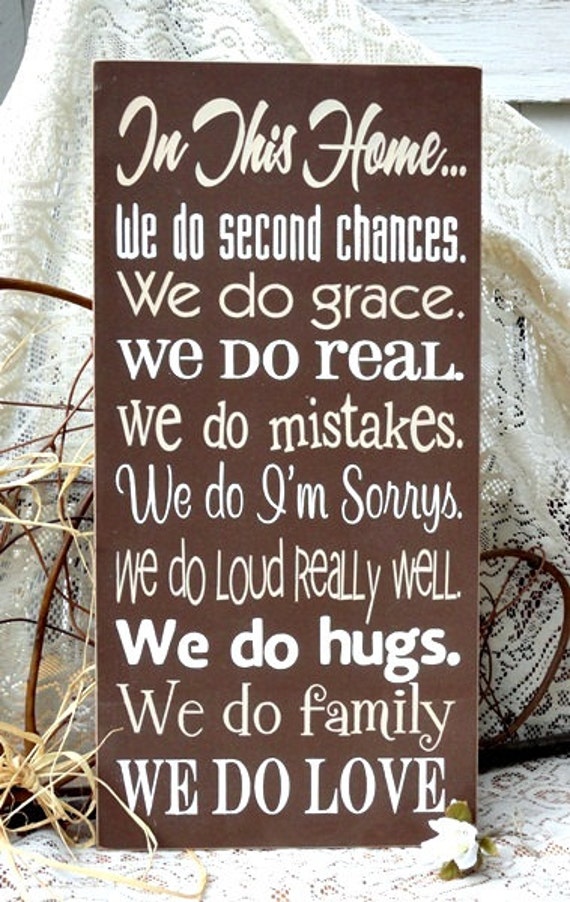 Families are complex creations, but that is what makes them beautiful. Love exists in all familial forms: single parents, married parents, gay parents, childless couples. Far be it from any one of us to judge another's choices or lifestyle; rather, we can only do our best to extend a helping hand when one is needed.
 A family isn't the presence or absence of a partner, children, a pet, a car, or any tangible item. A family is defined by love.
As always:
Thoughts/comments/ideas/rebuttal welcome: leahc168@gmail.com
Saturday, December 1, 2012
Emotional Kevlar
With a heavy heart, I've been thinking all day about the recent line-of-duty death of Officer Tom Decker of the Cold Spring (MN) Police Department. Officer Decker was just 31 years old and leaves behind a wife and children. By all accounts, he was a fine man and a good cop.
In talking over the tragic event with a friend, I reflected back on my own marriage to a police officer. When we were dating, I used to make him call me at the end of each shift so that I knew he was okay. After a few months of these 4:00 am wakeup calls, I was exhausted...and hardly consoled with regard to his safety. Finally, I consulted his mom: how did she handle the stress of both her husband (a commander) and her son (an officer) being cops?
"It's in God's hands," she told me.
Although I have never been a religious person, for some reason her words made sense. Worrying wasn't going to keep him any safer. I tucked her advice into my heart and tried to keep calm and carry on. After all, what option did I truly have?
Every day that my husband would put on his bulletproof vest with the extra layers of Kevlar over his physiological heart (called, horrifyingly enough, a "trauma plate"), I would layer another piece of my own Kevlar over my emotional heart. I isolated my fears to keep them from invading the rest of me.
As it turns out, bulletproof vests aren't really bulletproof--they're only bullet-resistant to some forms of ammunition. Some of them won't even repel a knife stick.
And like the myth of the "bulletproof" vest, my emotional Kevlar wasn't fail-proof. Sometimes, the bad news found its way through the woven fibers and straight into my core. I've been to two line-of-duty death police funerals--one of them just days after we returned home from our honeymoon--and I assure you, they are not for the faint of heart. It's soul-numbing to see a grown man in full police uniform with tears running down his cheeks while he stands at attention to honor his friend. On those occasions, you wrap your arms around your husband a little tighter, you cry, and you try to convince yourself that it won't ever be you.
Emotional Kevlar, as a concept, isn't unique to cop spouses/partners. All of us have walls that we've built up to protect our hearts from one reality or another. The trauma plates that protect our emotional centers are the result of fear, whether real or perceived. Sometimes they're based on our own bad experiences--times when we were the target of metaphorical gunshots--and sometimes they're the result of someone else's tragedy that we've internalized.
The question becomes: Is the Kevlar necessary, or should it be retired? And if it is necessary, is it thick enough to prevent tragedy?
My thoughts and prayers go out tonight to Officer Decker's family and loved ones, friends, and fellow officers. I will say another prayer tonight for all of my friends in law enforcement who put their lives on the line every day so that the rest of us may sleep in peace. There will be a third prayer for the family members who support our police officers--those families that give up birthday parties and anniversaries and sometimes even their loved ones so that you and I are safe.
This photo was taken on the chilly November day in 2007 when the Minneapolis Park Police buried Officer Mark Bedard, who was killed in the line of duty while pursuing a drive-by shooter. Officer Bedard touched many lives and his gift to all of us is not forgotten.
It's of my then-husband and I, reunited at the end of a long and terrible day--a day when he was the one standing tall, saluting the casket of a friend, with tears falling on his cheeks.

In talking over the tragic event with a friend, I reflected back on my own marriage to a police officer. When we were dating, I used to make him call me at the end of each shift so that I knew he was okay. After a few months of these 4:00 am wakeup calls, I was exhausted...and hardly consoled with regard to his safety. Finally, I consulted his mom: how did she handle the stress of both her husband (a commander) and her son (an officer) being cops?
"It's in God's hands," she told me.
Although I have never been a religious person, for some reason her words made sense. Worrying wasn't going to keep him any safer. I tucked her advice into my heart and tried to keep calm and carry on. After all, what option did I truly have?
Every day that my husband would put on his bulletproof vest with the extra layers of Kevlar over his physiological heart (called, horrifyingly enough, a "trauma plate"), I would layer another piece of my own Kevlar over my emotional heart. I isolated my fears to keep them from invading the rest of me.
As it turns out, bulletproof vests aren't really bulletproof--they're only bullet-resistant to some forms of ammunition. Some of them won't even repel a knife stick.
And like the myth of the "bulletproof" vest, my emotional Kevlar wasn't fail-proof. Sometimes, the bad news found its way through the woven fibers and straight into my core. I've been to two line-of-duty death police funerals--one of them just days after we returned home from our honeymoon--and I assure you, they are not for the faint of heart. It's soul-numbing to see a grown man in full police uniform with tears running down his cheeks while he stands at attention to honor his friend. On those occasions, you wrap your arms around your husband a little tighter, you cry, and you try to convince yourself that it won't ever be you.
Emotional Kevlar, as a concept, isn't unique to cop spouses/partners. All of us have walls that we've built up to protect our hearts from one reality or another. The trauma plates that protect our emotional centers are the result of fear, whether real or perceived. Sometimes they're based on our own bad experiences--times when we were the target of metaphorical gunshots--and sometimes they're the result of someone else's tragedy that we've internalized.
The question becomes: Is the Kevlar necessary, or should it be retired? And if it is necessary, is it thick enough to prevent tragedy?
My thoughts and prayers go out tonight to Officer Decker's family and loved ones, friends, and fellow officers. I will say another prayer tonight for all of my friends in law enforcement who put their lives on the line every day so that the rest of us may sleep in peace. There will be a third prayer for the family members who support our police officers--those families that give up birthday parties and anniversaries and sometimes even their loved ones so that you and I are safe.
This photo was taken on the chilly November day in 2007 when the Minneapolis Park Police buried Officer Mark Bedard, who was killed in the line of duty while pursuing a drive-by shooter. Officer Bedard touched many lives and his gift to all of us is not forgotten.
It's of my then-husband and I, reunited at the end of a long and terrible day--a day when he was the one standing tall, saluting the casket of a friend, with tears falling on his cheeks.
source: Star Tribune
Subscribe to:
Posts (Atom)